
Experiences to enjoy
Taveyanne, an Alpine Hamlet Where Heritage Comes to Life
Published on 02.11.2026
Content
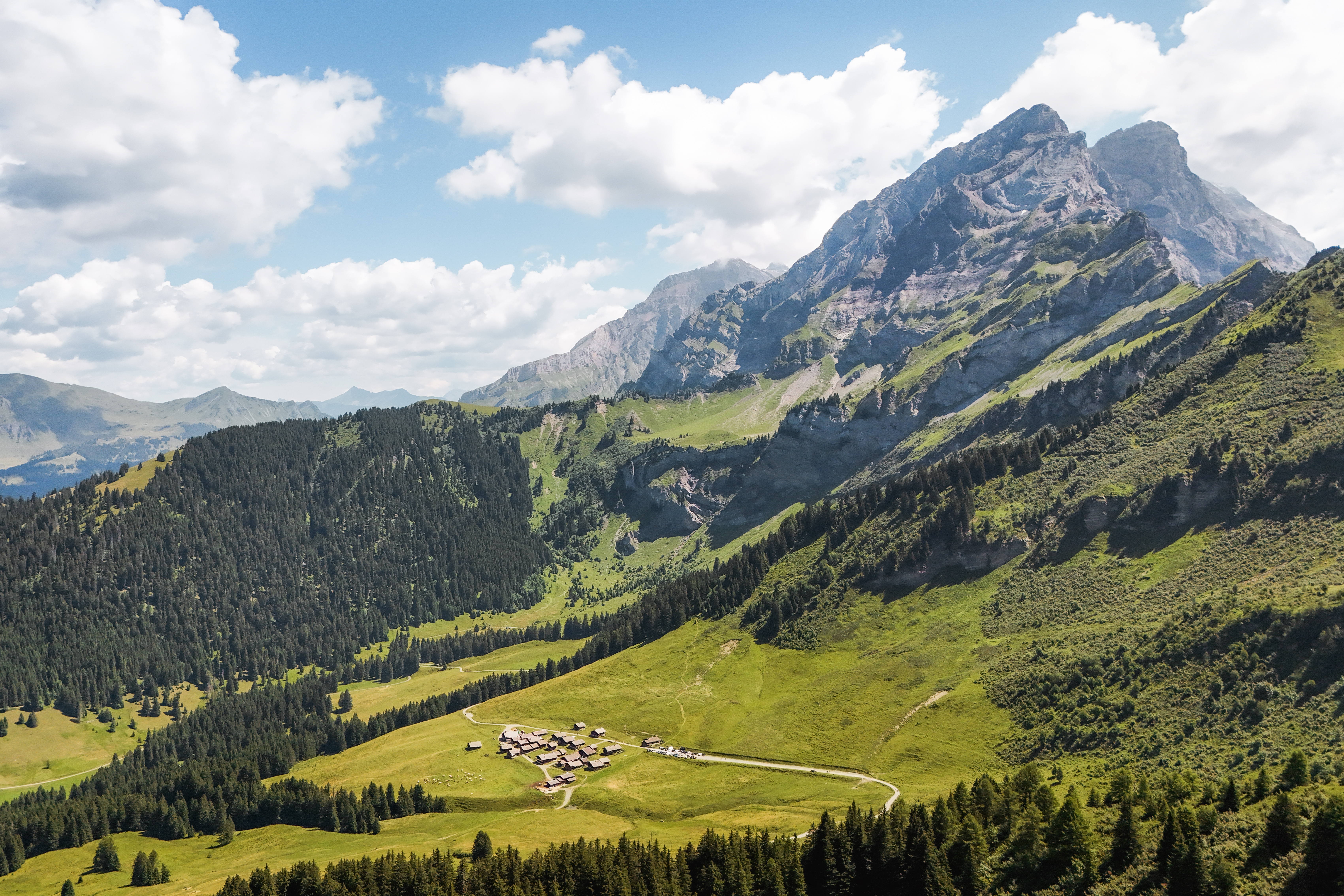
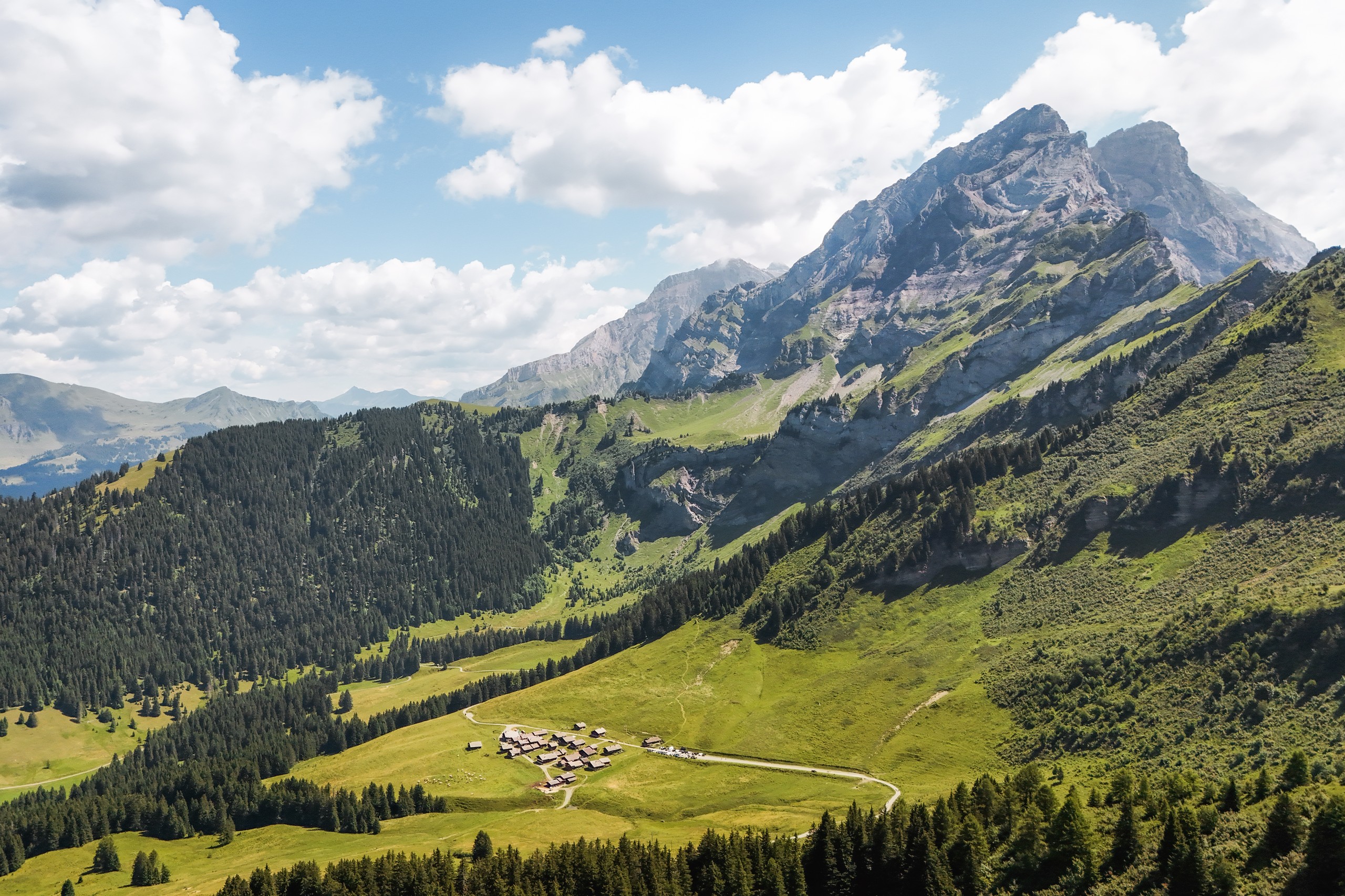
Just a few kilometres from Gryon, Taveyanne seems frozen in time. Nestled in the heart of a vast alpine pasture, this mountain hamlet, with its wooden chalets and traditional shingle roofs, tells the story of centuries of mountain life. Behind its weathered façades lie memories of a devastating fire, traditional craftsmanship and customs that are still very much alive today. Welcome to one of the treasures of the Alpes Vaudoises' heritage.
A hamlet shaped by life on the alpine pastures
As soon as you arrive in Taveyanne, it's easy to see what makes this place so special. Surrounded by meadows, the traditional log chalets stand close together in neat rows, their wooden roofs creating a truly distinctive silhouette.
But before becoming one of Gryon's most iconic landscapes, Taveyanne was first and foremost a place of work. As early as the Middle Ages, herds were brought up to the alpine pastures during the warmer months. Village families sent their young herdsmen to look after the animals, milk the cows and make butter and cheese.
Life was organised around the rhythm of the seasons and the needs of the livestock. Every chalet, path and stretch of pasture bears witness to this traditional alpine farming economy, which shaped daily life for the people of Gryon for centuries.
1719: The fire that changed the face of Taveyanne
Taveyanne's history is also marked by a dramatic event. In 1719, on the day the herds were taken up to the alpine pastures, a devastating fire swept through the hamlet, destroying 36 chalets. On the very same day, the village of Gryon was also engulfed in flames.
Yet Taveyanne quickly rose from the ashes. The first buildings were reconstructed as early as the following year. Most of the chalets still standing today were rebuilt between 1720 and 1830, giving the hamlet its present-day appearance.
More than three centuries after the fire, this remarkably well-preserved architectural ensemble tells a story of resilience and mountain community solidarity.
Tavillons: A traditional craft passed down through generations
It's impossible to talk about Taveyanne without mentioning its roofs. They are covered with tavillons, thin overlapping wooden shingles that protect the buildings from the elements while giving them their distinctive character.
Behind this apparent simplicity lies true craftsmanship. Selecting the wood, preparing it and carefully installing the tavillons require an in-depth knowledge of the material and mastery of traditional techniques passed down through hands-on experience.
This ancestral craft is far from being a thing of the past. In her portrait, The Art of Wooden Roof Shingles, Méline Durgnat takes us behind the scenes of this demanding and fascinating craft.
In Taveyanne, the roofs are therefore more than just an architectural legacy: they remind us that preserving heritage also means preserving the traditional crafts that bring it to life.
The Mi-été Festival: When All of Gryon Comes Together in Taveyanne
One tradition in particular reflects the strong bond between the locals and their alpine pastures: the Mi-été Festival in Taveyanne.
Originally, this traditional alpine festival was an opportunity for families who had remained in the village to visit the young herdsmen spending the summer up on the mountain. They would bring them supplies, catch up on news and check on dairy production, before sharing out the butter and cheese.
Over time, this gathering evolved into a true village celebration, bringing together music, singing and moments of togetherness. Much of its fame can be attributed to the poet Juste Olivier, who dedicated a song to the festival in 1869.
To this day, the Mi-été brings generations together, traditionally on the first Sunday in August. It's an occasion where Taveyanne's story continues to unfold through memories, reunions and shared traditions.
A protected landscape where nature and heritage meet
Taveyanne's charm lies as much in its chalets as in the landscape surrounding them. Alpine meadows, forests and the peaks of the Diablerets massif create a setting where nature and architectural heritage are closely intertwined.
Recognising the value of this unique environment, the people of Gryon decided to protect the site for future generations. In 1970, a nature reserve easement was established to preserve its landscapes and natural habitats.
Taveyanne is also listed in the Federal Inventory of Swiss Heritage Sites of National Importance (ISOS), which recognises the value of its architectural ensemble and its harmonious integration into the surrounding landscape.
This protection encourages everyone to explore the area with respect, by staying on marked paths and preserving the peace and quiet of the alpine pastures. After all, Taveyanne's heritage is not simply something to admire: it is also passed on through the care we take to protect it.
Taveyanne: A story to discover with every step
A walk through Taveyanne reveals much more than a picture-postcard setting. It's an opportunity to imagine the daily lives of the herdsmen of the past, admire the intricate details of a traditional wooden shingle roof and reflect on how far the hamlet has come since the fire of 1719.
And while the hamlet may sometimes seem frozen in time, its story continues to unfold. Through the traditions of Gryon, the work of local craftspeople and the ongoing efforts to preserve this unique landscape.
During a walk through Taveyanne, take the time to look beyond the façades: every chalet tells a part of the Alpes Vaudoises' history.
More articles
Discover more
Taveyanne
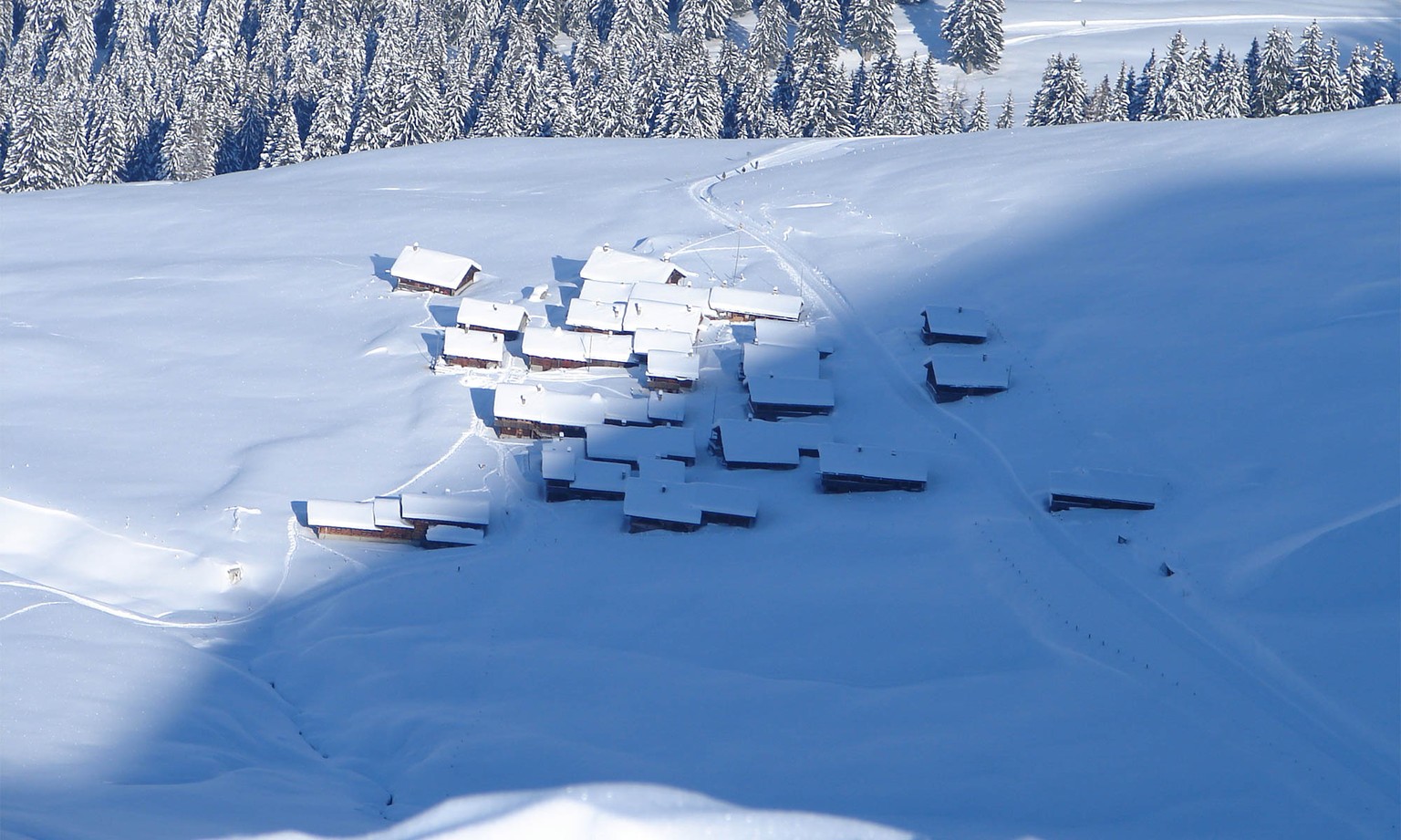
The picturesque hamlet of Taveyanne, a listed historical site with timber chalets and wooden shingle roofs is well worth a visit.
Taveyanne Sandstones
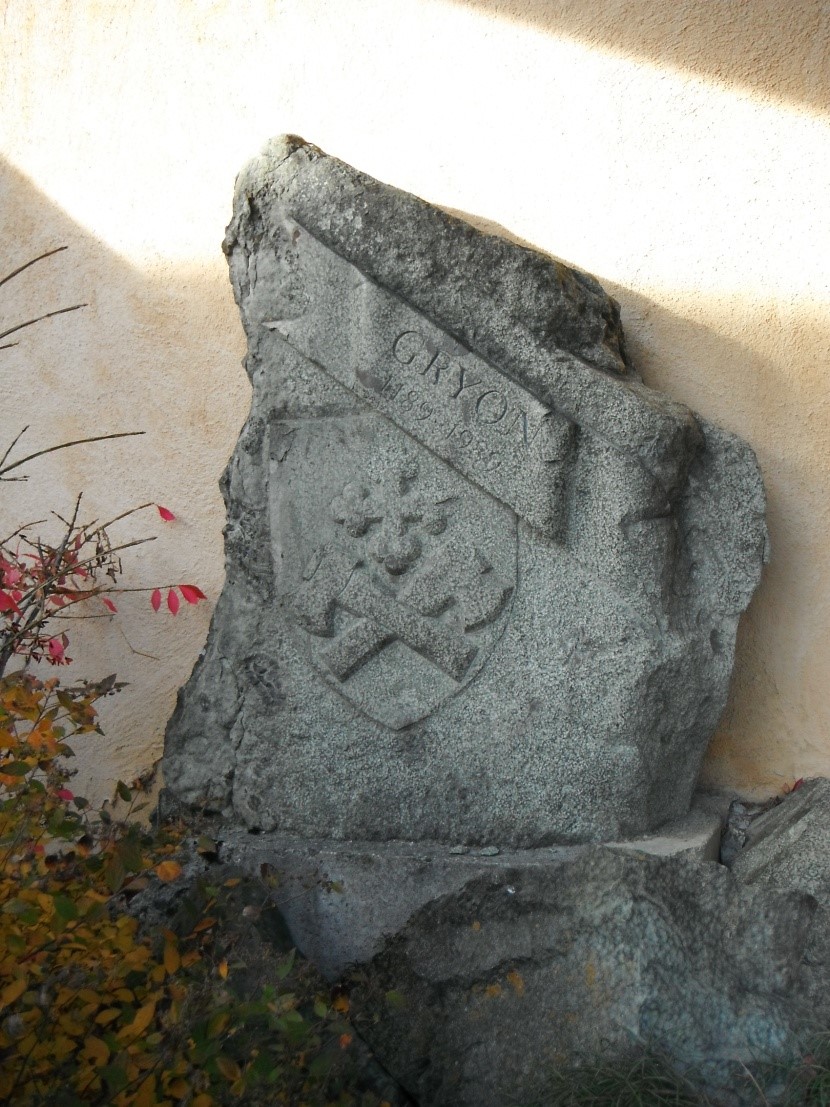
Sometimes in a river bed or rock fall you might find a round rock slightly green in colour but specked with black and white, the Taveyanne sandstone