





Travel diary
Did you know? The largest bird in the Alpes Vaudoises has a beard !
Published on 05.05.2026
Content
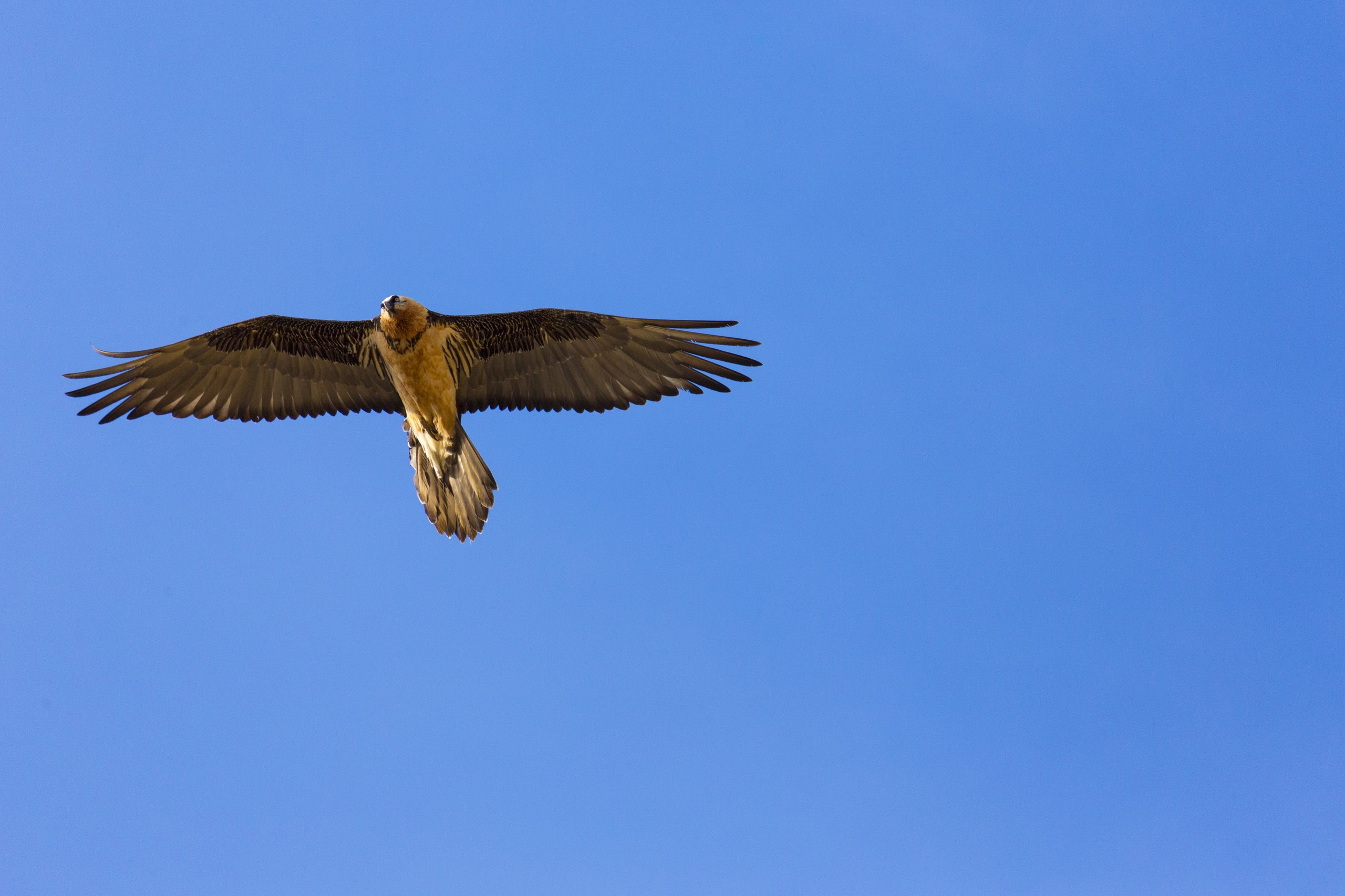
If you are somewhat familiar with the birds of the region, you probably know which one we are referring to: it is a vulture, whose wingspan – the distance from one wingtip to the other – can reach nearly 3 metres, and which displays a mysterious black “beard” beneath its beak.
A bird of legends and folklore
It is indeed the bearded vulture. This bird, due to its large size, was long described in legends as a predator attacking livestock and children. It was persecuted for many years, to the point that it disappeared from the Alps until the end of the 19th century. The first reproductions in Switzerland only took place in 2007, thanks to reintroduction and protection programmes.
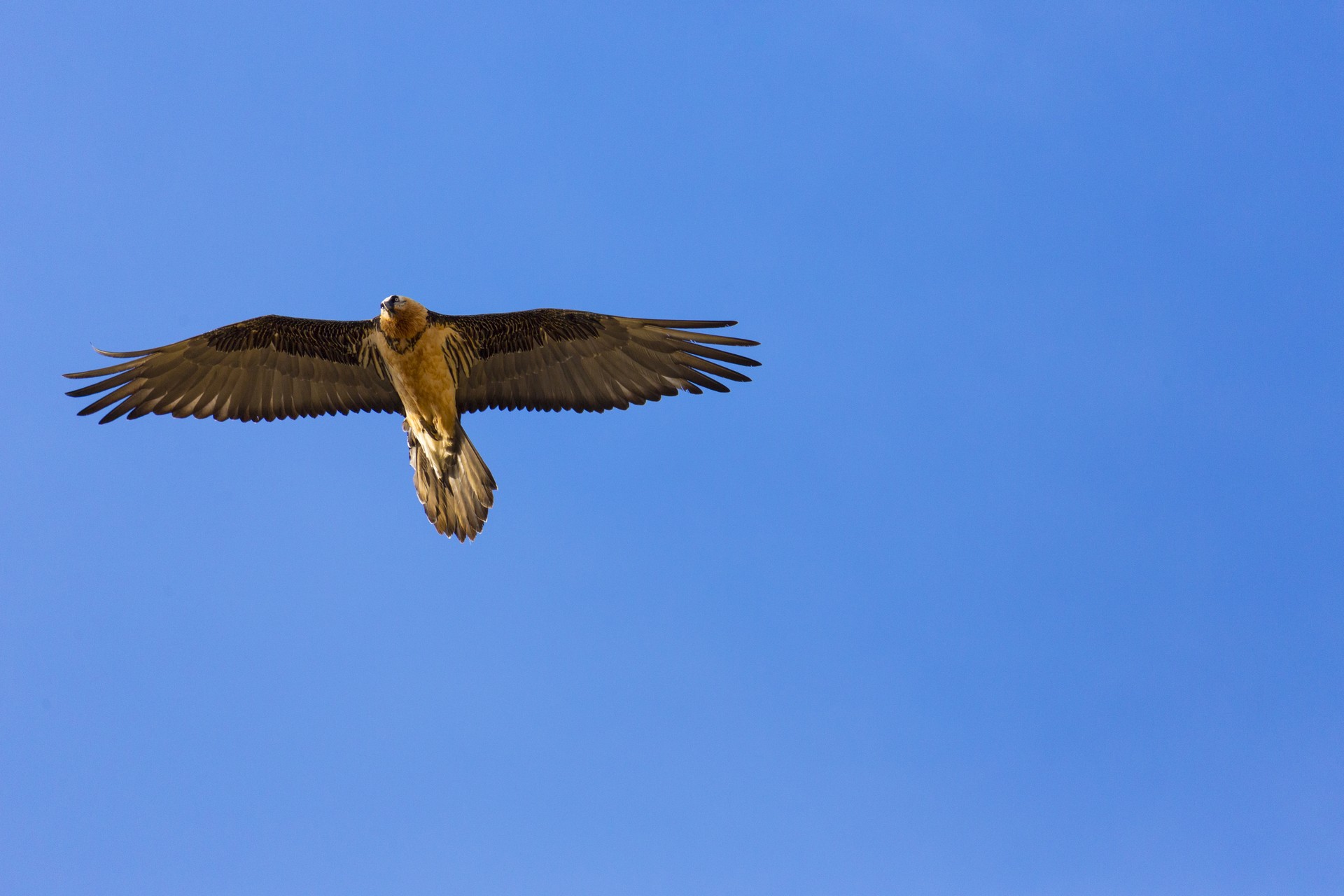
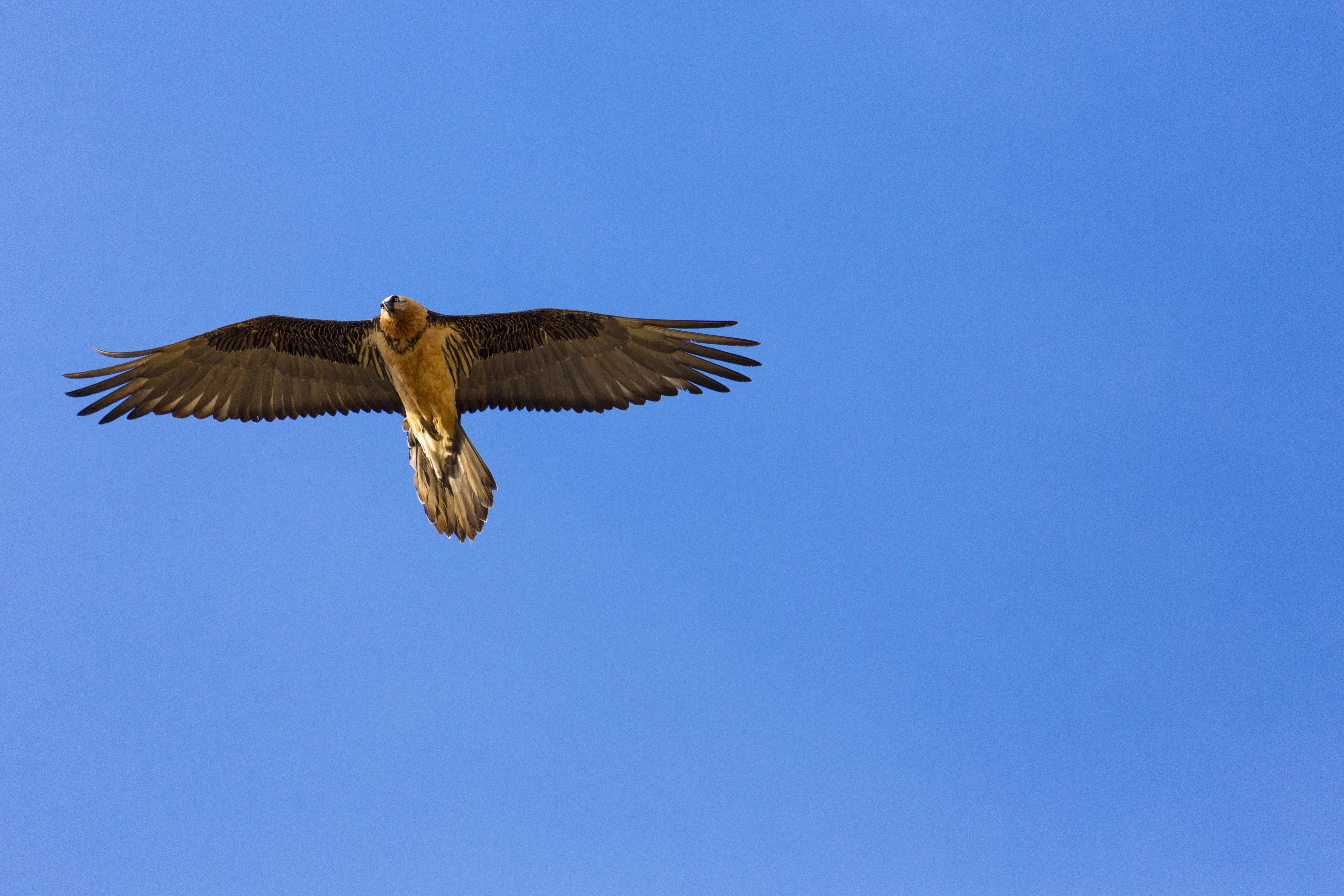
The bearded vulture has pale plumage on its belly and head, making it easily recognisable. Juveniles retain their dark grey-brown plumage for a year. © Camille Hue
A powerful ally for cleaning
Fortunately, the image of a predator associated with the bearded vulture is false: it is a scavenger and feeds only on carcasses. It is also the last to feed, after wolves, foxes and large carnivores: thanks to its flexible crop and its powerful digestive juices in its stomach, it swallows bones and even consumes tendons and ligaments from ungulates (chamois, ibex, deer). When the bones are too large (more than 40 cm), it carries them high into the air and drops them onto rocks, where they break into smaller fragments. The vulture is therefore very useful in the elimination of waste, which is why it is nicknamed the “cleaner of pastures” for its essential sanitary role!
A wide reach means a large area
This sedentary vulture lives in mountain areas, and it is therefore possible to see it in the Alpes Vaudoises. However, you will need some patience… This bird remains rare, and covers a territory that can reach 350 to 700 km². To give you an idea, the Chablais AOC vineyard, which stretches from Villeneuve to Bex, covers 590 hectares and represents around 15% of the Vaud vineyard. The area flown over by a bearded vulture is therefore 59 to 118 times larger, and is equivalent to the total surface area of the Alpes Vaudoises!
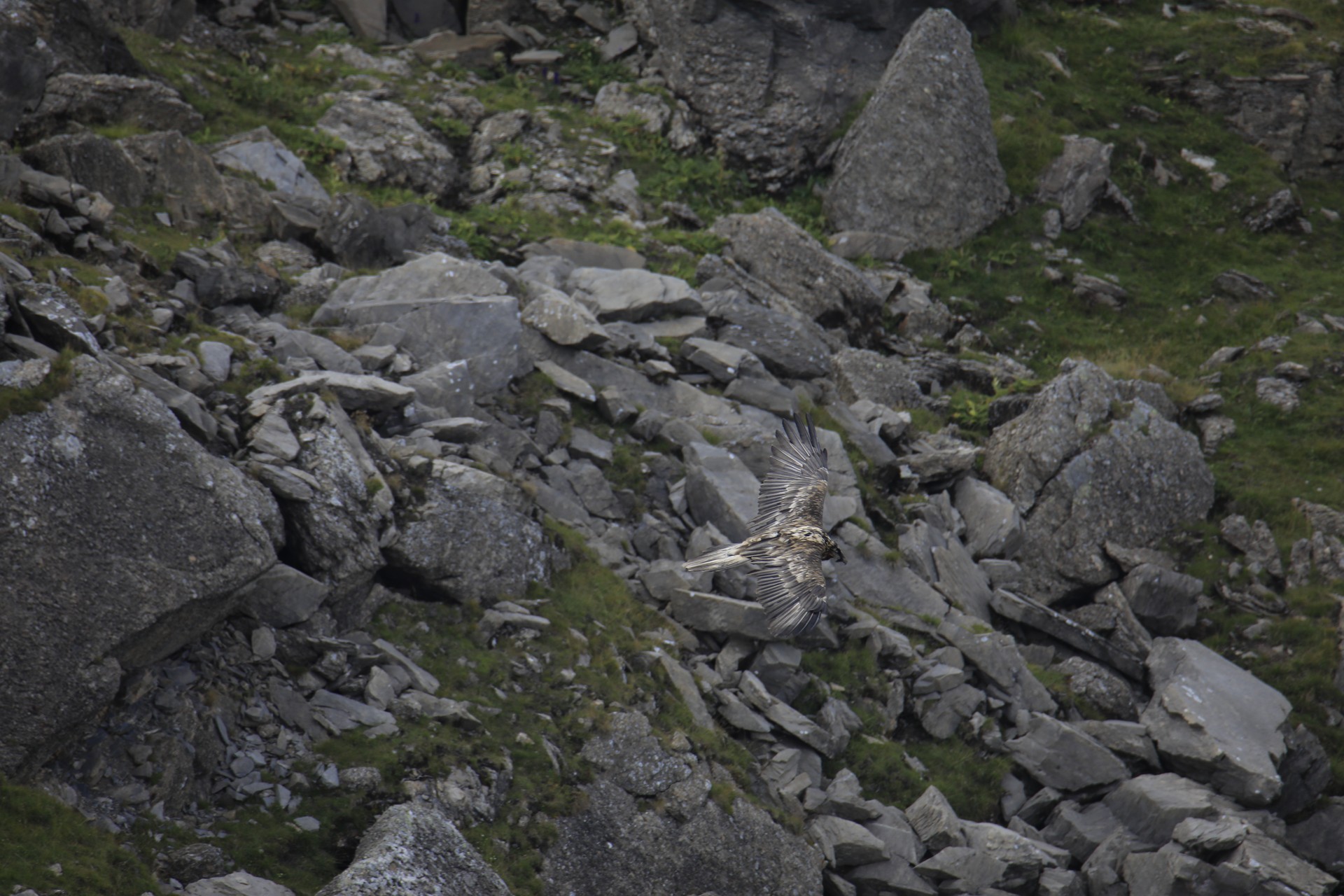
Although it has no natural predators as an adult, the bearded vulture has plumage on its back that allows it to blend in perfectly with its surroundings (pictured: a juvenile bearded vulture) © Camille Hue
More articles
Discover more
The world of birds
Guided tour to discover, recognize and listen to these flying vertebrates.
hikingOn foot
the tour of animals
route 3 km
schedule 50 min
trending_up 106 mtrending_down 106 m